
День: 18.08.2025

Science

Science. 1934. Vera Mukhina. Tinted plaster. Dimensions: 52×14×12 cm. Tactile model. Plastic, metallization (bronze). A monumental, minimally detailed figure of a standing woman. The face lacks distinct features, and her hair is gathered at the back of her head. With both hands, she holds an open book high above her head. The upper part of her dress nearly merges with her body, while the long skirt envelops her figure in heavy folds. Her left leg is bent at the knee and rests on a model of the globe.In the 1930s, Mukhina worked on various commissions for architectural projects, most of which remained unrealized. One such work is the sculptural maquette «Science», created for the Moskva Hotel building. The sculpture appears to embody the invincible power of reason—armed with which, any person becomes capable of great achievements. It is significant that the figure is a woman, representing the emancipated «class.» Her «peasant»-like attire also carries symbolic weight. by Daniil Dolgikh and Irina Savenko In the video, Daniil Dolgikh talks about his favourite tactile model in English 🙂
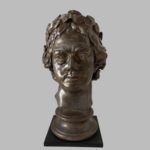
Portrait of Peter I

Portrait of Peter I, Model for the Monument «The Bronze Horseman» by Étienne-Maurice Falconet, 1767. Artist: Marie-Anne Collot. Material: Plaster. Dimensions: 93×57×60 cm. Tactile model: Plastic, Metallisation, Bronze. The emperor is depicted in mature age. His proudly raised head is framed by thick, wavy locks, crowned with a laurel wreath—a symbol of glory, victory, and peace. A high forehead is marked by deep wrinkles. Thick eyebrows are arched sharply at the centre. Heavy upper eyelids overhang large eyes. His gaze is directed to the right, slightly downward. Pupils are rendered as heart-shaped perforations. The nose is straight, with a pronounced bridge. Neat moustaches sit above a small mouth. A strong, determined chin completes the image of an enlightened monarch, embodying indomitable will and energy. Original Bust Title: Plaster Sketch for the Monument to Peter I «The Bronze Horseman». The monument became an iconic, myth-forming symbol of St. Petersburg from the moment of its installation on Senate Square in 1782. The great sculptor Étienne-Maurice Falconet spent years crafting the rider’s head. He prepared three versions, all rejected by Empress Catherine II for lacking sufficient resemblance to Peter I. In despair, Falconet handed the task to his pupil, Marie-Anne Collot. Legend holds that she sculpted the head for The Bronze Horseman in a single night. The result delighted Catherine, who immediately granted her royal approval. Collot was awarded a lifetime pension. Falconet also publicly acknowledged his pupil’s contribution, emphasising her equal role in the creation of the monument. By Pavel Gostev